
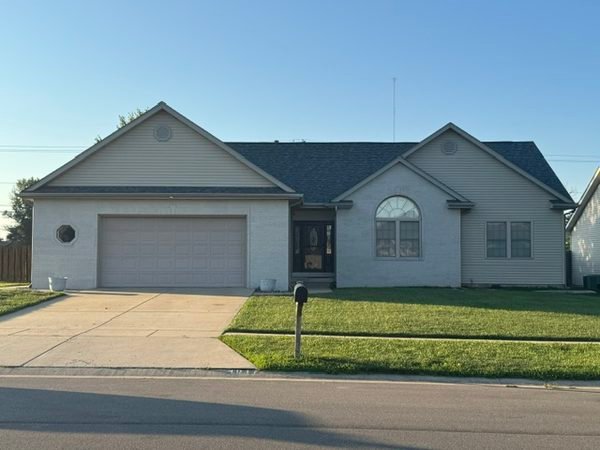
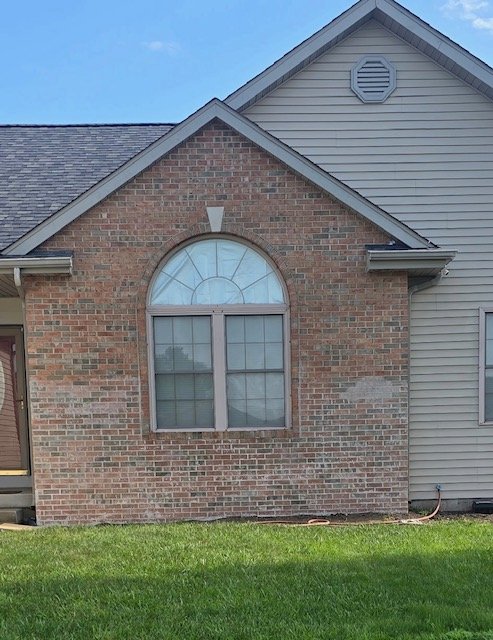
This wasn’t our first time whitewashing a brick house.
At our previous house, the brick was brown, dated, and desperately needed some life brought back into it. We decided to whitewash it, and overall, we really liked the result.
But there was one thing we would have done differently: once it was finished, the brick had a slight purple undertone.
So when we decided to whitewash the brick on our current house, we thought we knew what we were doing this time.
We weren’t just going to pick a white paint and hope for the best. We pulled out the color wheel, looked at the undertones in our orange brick, and tried to choose a white that would help neutralize all that warmth.
We had learned from our first house.
Or so we thought.
Why We Wanted to Whitewash the Brick
There were really a few things happening at once.
First, we just didn’t love the orange brick. Whitewashing had worked well for us before, so it felt like a relatively simple way to update the exterior without completely covering up the character of the brick.
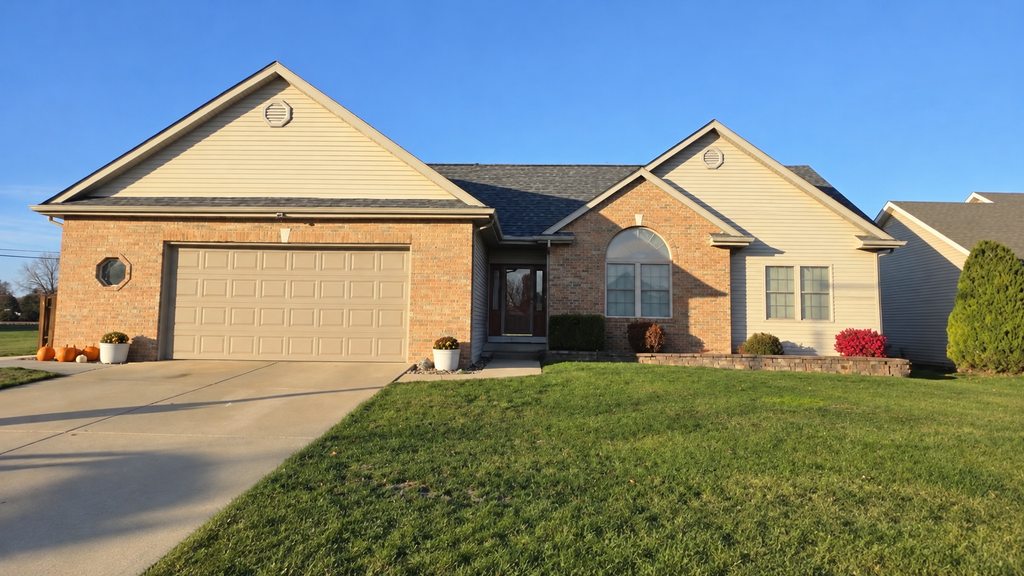
And then there was the red front door.
I really didn’t like that red door.
I already knew I wanted to eventually take the door much darker, so whatever we did with the brick needed to work with that future change. The goal wasn’t necessarily to make everything white. It was to create a more neutral backdrop that would let some of those darker exterior elements make sense.
After looking at the undertones in the brick and comparing paint colors, we landed on Natural White. On paper, it seemed like exactly what we needed to tone down all that orange.
So we started painting.
And almost immediately, we stopped.
Our First Color Lasted About Five Minutes
While I was working on prepping the front door for paint, my husband started mixing the whitewash.
From the beginning, we knew we wanted more coverage than a traditional whitewash. We weren’t trying to create a really sheer finish with a lot of the original orange brick showing through, so we used less water than is typically recommended to create a heavier mixture.
We had our plan. I was working on the door, he was working on the brick, and theoretically the two projects were going to come together into one cohesive exterior.
Then he painted one tiny section near the bottom of the house.
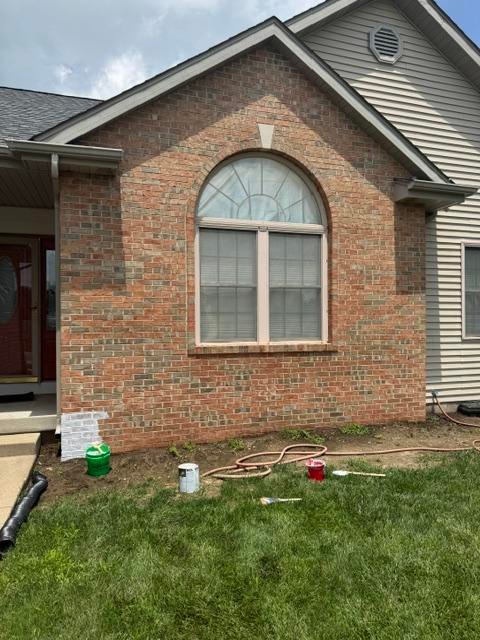
“I think you need to look at this.” Never a good sign.
I walked over and immediately knew Natural White wasn’t going to work.
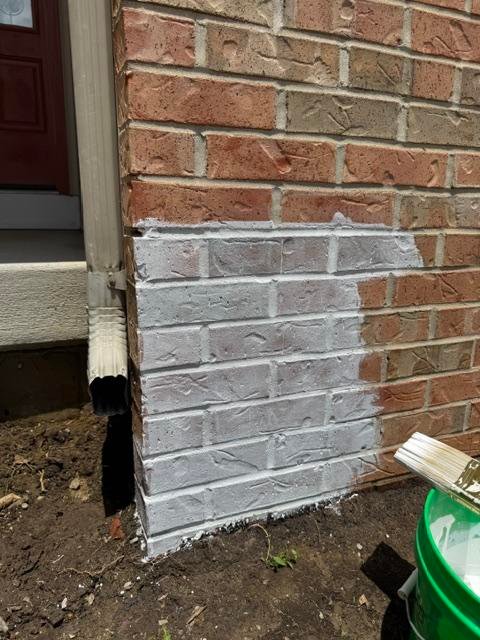
It was so stark against our beige siding. Instead of calming down the orange brick and helping everything work together, the bright white made the siding look even more beige.
In the sunlight, it practically felt like the brick could blind you. Okay, maybe not literally. But it was bright.
So we stopped. Instead of convincing ourselves it might look better once the whole house was finished, I started Googling. We knew we needed to move away from a true-looking white and toward something warmer—but I didn’t want the house to simply look beige, either.
That’s when we landed on Accessible Beige. It seemed like the compromise we were looking for: warmer and softer than Natural White, but still light enough to give us the updated look we wanted.
So my husband headed back to Sherwin-Williams. Thankfully, because Natural White was such a light starting point, they were able to tint the paint we already had to Accessible Beige rather than having us start over with an entirely new gallon.
Crisis averted.
Or at least we thought it was.
Accessible Beige Was Better… Until It Wasn’t
About an hour later, we were back in business.
This time, though, we changed more than just the color.
After seeing how heavy our first whitewash mixture looked, we started wondering if maybe we did want more of the original brick showing through. So we added more water this time—probably somewhere around a 50/50 mixture—and started again with Accessible Beige.
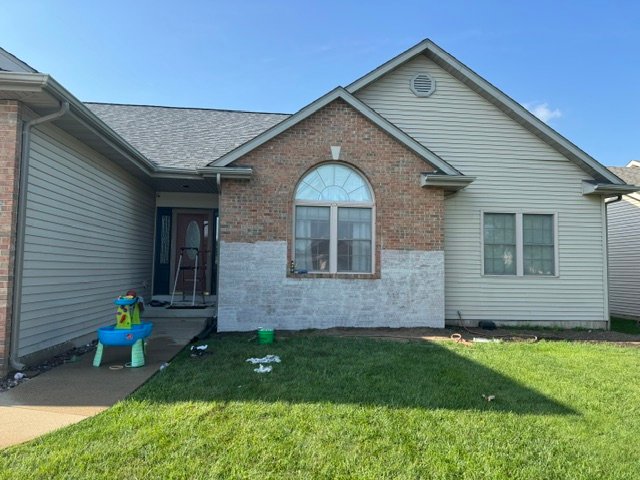
Immediately, we had a different problem. Now we could see the brick through the paint, but the coverage looked completely uneven. Some areas were lighter. Some were darker. Some showed more brick than others.
We weren’t panicking yet. We figured a second coat would probably even everything out, so we kept going.
Then nap time ended.
Because, of course, we’re doing all of this with little kids in the house.
The project went on hold until bedtime, and by the time we got back outside, we were looking at everything under completely different lighting. We decided to paint one section a little heavier to see if more coverage would help.
And technically… it did. The finish looked more even.
But now I had a much bigger problem.
I hated it.
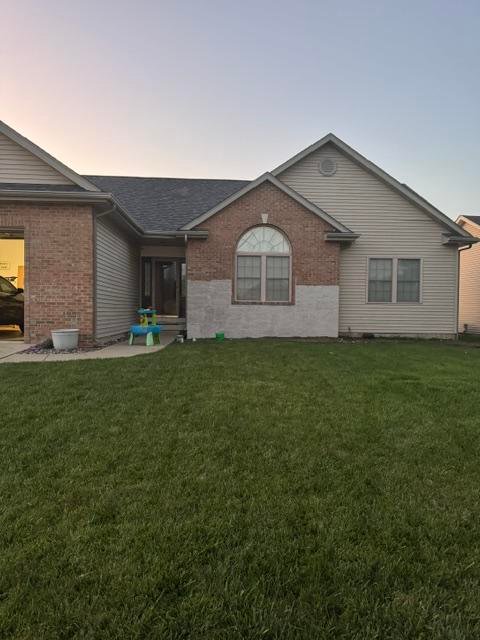
The “What Have We Done?” Moment
Standing there looking at the harsh line between the newly whitewashed brick and the original orange brick, I had my full DIY freak-out moment.
I started looking around at the brick houses near us. Their brick had variation. Different tones. Imperfections. Character.
Then I looked back at ours.
To me, it suddenly looked fake.
Everything I hadn’t loved about the orange brick was starting to seem a whole lot better than what we were creating.
And that’s when the regret really set in. I didn’t just dislike the paint color anymore. I was questioning the entire idea of whitewashing the house.
I wanted my old brick back.
Thankfully, my husband could tell just how upset I was and started researching whether there was any way to undo it. And somehow, buried in all that Googling, we found our possible escape route:
We could strip the paint back off the brick.
So after spending the day before carefully putting paint onto our house, guess what we did the next day?
We started taking it all back off.
The Next Day, We Started Undoing Everything
The next day, we came outside armed with Klean-Strip Concrete Stripper and a whole lot of nerves.
Mostly mine.
I am very much a read-the-instructions, follow-the-rules kind of person. And considering we were about to put paint stripper on the brick covering the front of our house, this was not the day I was going to wing it.
We applied the stripper with a brush and let it sit for about 10 minutes. Then we came back with a stiff plastic-bristle scrub brush and started working the paint off.
A quick note: This is what worked for us, not a recommendation to use the same method on every brick surface. Always check the product instructions, confirm that the stripper is appropriate for your masonry, and follow the manufacturer’s safety precautions before attempting paint removal.
And then something wonderful happened. The paint came off.
Not sort of came off. It came off so easily.
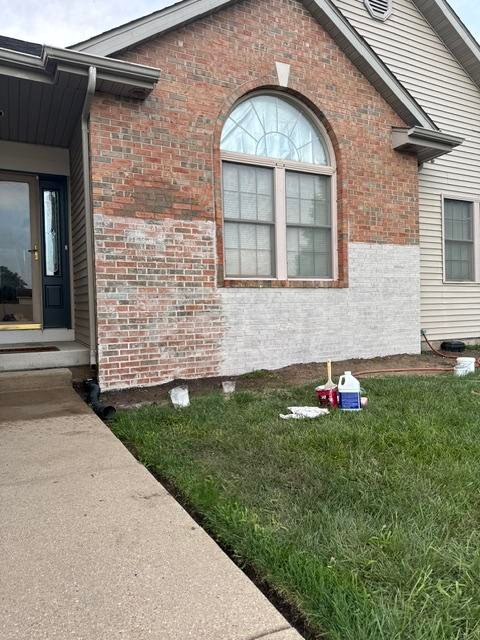
Because the paint hadn’t had enough time to fully cure, we had caught our mistake at exactly the right time. What I had been imagining as another enormous project suddenly felt completely manageable.
And underneath all that paint was the brick I had been so desperate to cover the day before.
Except now I looked at it completely differently.
Hello, pretty charming brick.
Our Accidental “Backwards Whitewash”
As we kept stripping, we realized we didn’t necessarily have to remove every bit of paint. We could control it.
In some areas we took more off. In others, we left a little more behind. And suddenly we started wondering if we had accidentally stumbled onto something better than the whitewash we’d originally planned.
We started calling it our backwards whitewash.
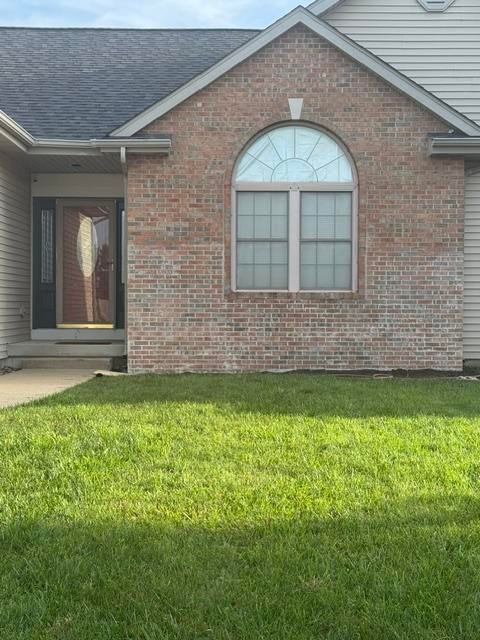
Instead of starting with the original brick and slowly adding white, we had covered it—and were now slowly revealing the brick again until we liked what we saw.
And there was another unexpected benefit.
The mortar had lightened considerably from the whitewash, so even as we exposed more of the original brick, those lighter mortar lines remained. That contrast gave the brick a completely different look. It felt brighter and fresher without losing all of the variation and character that had made me regret covering it in the first place.
Even the color seemed different.
While the brick was wet from the stripping process, the tones looked more red than orange.
We loved it.
We even started talking about finding a sealer that might help preserve some of that richer, wet-brick color.
We never made it to the sealer.
Because apparently this project hadn’t had enough plot twists yet.
But First, I Needed to Be Sure
Even though I was loving the stripped brick, I still wasn’t completely sure about Accessible Beige itself. It leaned more white than beige on our exterior, and there was one more color I needed to see.
And because I am apparently incapable of moving forward with a house project until I have exhausted every possible option, of course I had to test it.
We had leftover Balanced Beige from the inside of our house. So I asked my husband to paint another test section.
Have I mentioned that my husband is a saint?
Balanced Beige answered the question pretty quickly. On our brick, it looked muddy and sandy-exactly what I didn’t want.
Accessible Beige it was. Finally, after multiple colors, multiple mixtures, and stripping off what we’d already painted, we had a plan.
Sort of.
So We Painted the Entire House… Just to Take It Back Off
This may be the point in the story where our neighbors officially started wondering what we were doing.
To recreate the look we’d discovered while stripping, we first needed to finish painting the brick.
All of it.
I took the kids out for the day so my husband could work without stopping, and he painted the entire front of the house. I did ask him to leave the brick framing the window untouched because I wasn’t completely convinced I wanted to treat that area the same way.
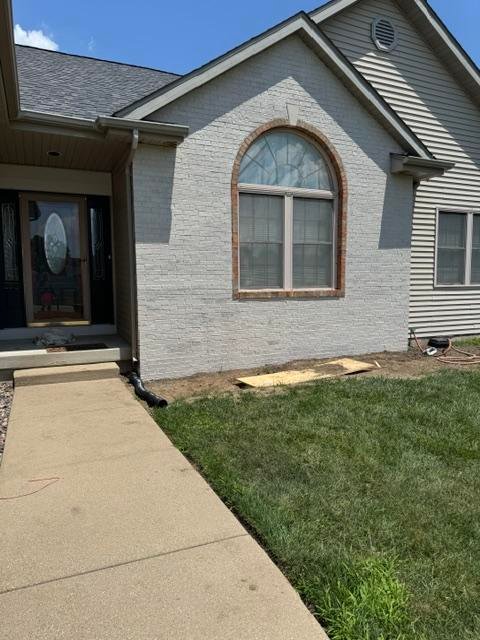
At this point, we weren’t trying to achieve the perfect whitewash finish anymore. We knew most of this paint was coming right back off.
So my husband went back to a heavier mixture—roughly two-thirds paint to one-third water. That gave him better coverage over the mortar, went on much more evenly, and made the painting process significantly faster.
Which is helpful when you’re painting an entire house with the full intention of stripping it afterward.
DIY logic.
Maybe We Could Make It Look Like a German Smear?
Then came what was supposed to be the fun part.
We started stripping.
But instead of completely recreating that freshly stripped brick we’d fallen in love with, we decided to experiment one more time.
We wondered if leaving more of the lighter finish behind could give the brick a German-smear-inspired look—something with an older, more Colonial feel that we thought might fit the character we were trying to create.
The first few rows looked great. Naturally, this gave us confidence.
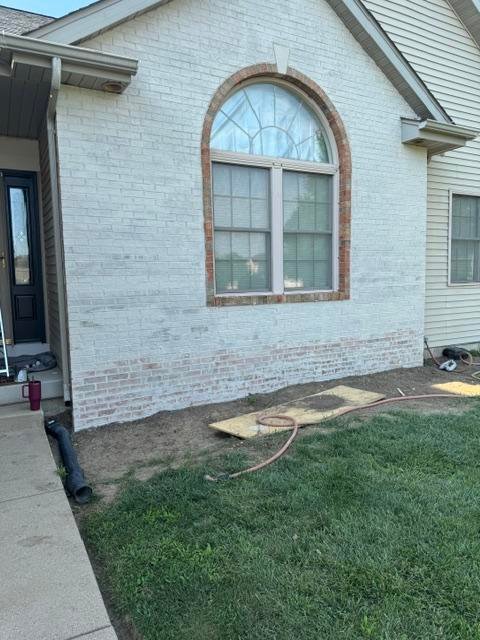
Then we moved up to the next section, and it looked completely different. The finish was uneven, and you could clearly see where we’d treated the bottom rows one way and the next section another.
So we added more paint to the second section and tried again. Still no. We adjusted. Tried again. Still couldn’t get it right.
At some point, we finally had to admit that we were trying way too hard to recreate something that had looked good because we hadn’t been trying to create it in the first place.
So we went back to the plan that had already worked.
Paint the brick.
Strip it back.
And this time, stop messing with it.
Except…
We didn’t.
And Then We Changed Our Minds. Again.
By this point, this project had stretched across several weeks. And something had started happening that neither of us really noticed at first.
We were getting used to the painted brick.
After our final attempt at stripping, we were standing outside looking at the section we’d been working on and the painted brick over the garage. There was still this mix of finishes across the front of the house, which made it difficult to picture what any one option would actually look like finished.
So I told my husband I needed to see it. All of it.
I wanted to see what the house looked like with all of the brick painted Accessible Beige before we stripped anything else.
At this point, I think both of us were a little surprised to admit that we were actually starting to like the painted sections.
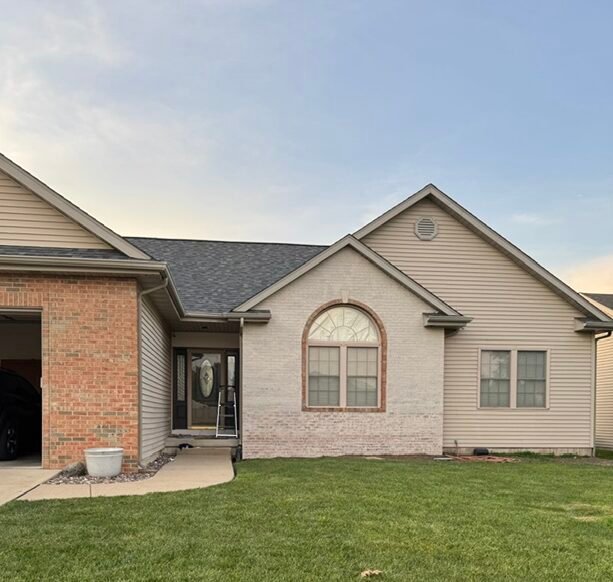
So after everything we’d done—changing colors, changing the whitewash mixture, stripping paint off, experimenting with a German-smear-inspired finish, painting sections again, and stripping them again—we painted the brick.
All of it.
And…
we loved it.
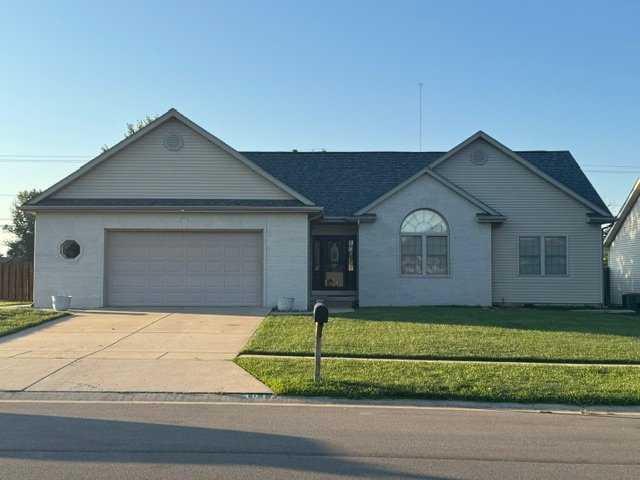
And if you’ve stuck with this story all the way from Natural White to Accessible Beige to stripping it off to painting it again to attempting a German smear to stripping that off just to watch us ultimately paint the entire house…
I applaud you.
Imagine how my husband felt.
Apparently, I Just Needed a Minute
Looking back, I think I know what happened that first night.
The change was huge.
I had spent so much time picturing what I thought the house would look like that when the first painted section didn’t immediately match the picture in my head, I panicked.
Instead of giving myself time to adjust to seeing our house completely differently, I assumed we’d made the wrong decision.
And because this was the front of our house, that felt like a pretty big wrong decision.
But over the next several weeks, while we painted and stripped and tested and changed our minds approximately 47 times, I had time to get used to seeing the house lighter.
And somewhere along the way, the thing I had been trying so hard to undo became the thing I wanted.
Our painted brick house is now painted Accessible Beige, and I love it. After all of that, our original idea wasn’t actually that far off.
Apparently, I just needed a minute.
What This Project Taught Me
If I could go back to that first night and tell myself one thing, it would probably be:
Just paint the brick.
But the truth is, I don’t know that I would have had the confidence to do that without everything that happened in between. Stripping the paint taught me something really important: I had a way out.
I knew the paint could come off. More importantly, I knew that if we painted the entire house and I still hated it, there was a version underneath that I actually liked. I had a backup plan. And knowing that made taking the leap feel a whole lot less scary.
So maybe the lesson isn’t that I should have trusted my first decision and skipped all the chaos in between.
Maybe all of that was part of getting there.
Testing the wrong color helped us find the right one. Stripping the paint helped us appreciate the original brick. Trying to recreate that stripped look showed us what we didn’t want. And living with the painted brick gave us enough time to realize what we did.
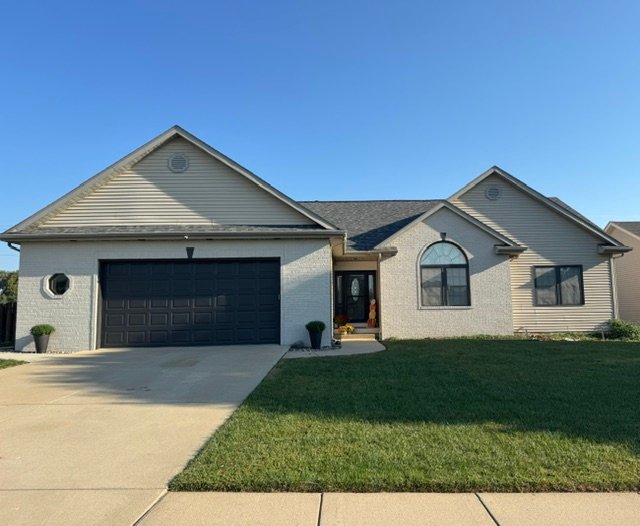
Sometimes you know exactly where you’re going.
And sometimes you paint your house, strip your house, paint your house again, strip parts of it again…
and somehow end up exactly where you were supposed to.