I love buying things for my house. There. I said it. This is probably not the confession you expected from someone who named her blog Keep the Couch.
I love walking through a home store. I love finding something that feels perfect for a room. I love seeing a beautiful house online and immediately wondering what I could change in mine. And I definitely know the feeling of standing in a room and thinking, something isn’t right in here.
The problem is that somewhere along the way, “something isn’t right” started turning into “I need something new.” A new rug, a new table, new decor, maybe new furniture. Suddenly fixing the feeling of a room has become a shopping list.
But after changing quite a few things around our own house—some successfully and some… considerably less successfully—I’ve started approaching rooms differently. Before you buy anything for your home, I think it’s worth figuring out what the actual problem is.
Most of the time, there are four places to look first:
KEEP. MOVE. CHANGE. INVEST.
Not every room needs all four. Sometimes the answer is just one of them. But figuring out which one you’re dealing with can save you from spending a lot of money fixing the wrong problem.
KEEP
This is probably the hardest one because when you’re ready to change a room, suddenly everything in it starts looking suspicious. The couch is wrong. The table is wrong. The rug has apparently offended you. Nothing is safe.
But sometimes the thing you’re convinced needs replacing is actually perfectly fine. Maybe you still like it. Maybe it functions exactly the way your family needs it to. Maybe the only reason you’ve started questioning it is because everything around it isn’t working.
That’s when I try to ask myself: If the rest of this room changed, would I still want to replace this?
If the answer is no, keep it.
I have a white console that I’ve owned since my first house. I originally bought it as a TV stand, and I loved it. When I moved in with my husband, it didn’t work as our TV stand anymore, but I didn’t want to get rid of it. So we moved it into our bedroom and used it for clothes instead.
When we moved into this house, it came with us. Since then, it’s found its way into different spots and somehow keeps finding another job. Its original purpose hasn’t lasted, but the piece itself has.
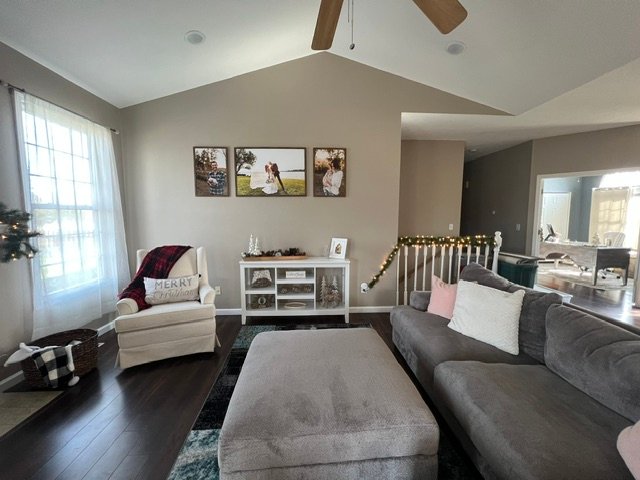
Our house has taught me this lesson over and over. There are things here that aren’t necessarily what I would choose if I were designing the entire house from scratch today, but we’re also a real family living in a real house with real budgets.
Something doesn’t have to be my forever choice to be perfectly good for right now. And sometimes, once everything around it starts working, I realize I actually like it more than I thought I did.
MOVE
Before you buy something new, move something. Seriously.
Move the chair, switch the lamps, take the little table from the bedroom and try it beside the couch. Move the artwork. Steal something from another room. Turn the rug. Pull the furniture away from the wall.
I cannot tell you how many times I’ve decided I needed something, only to realize I already owned something that worked. It was just in the wrong place.
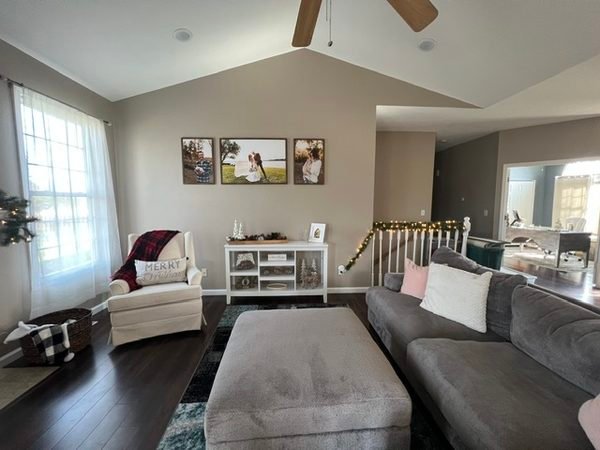
That same white console is a pretty good example of this too. When we bought a larger couch and rearranged our living room, the console no longer made sense where it had been. Instead of getting rid of it, we moved it to another wall in the same room—and it worked even better there.
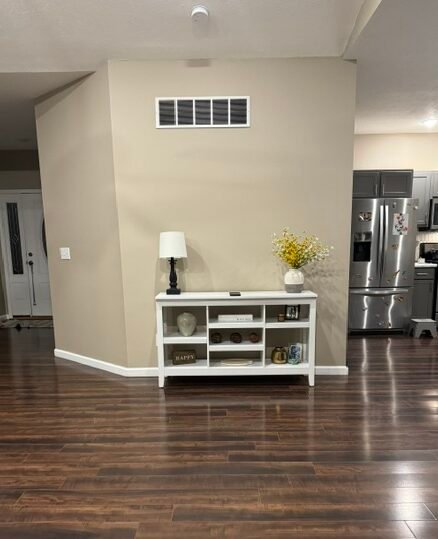
Your house doesn’t care which room something was originally purchased for. A bedroom dresser can become storage somewhere else. A basket can move from one room to another. Art that you’ve stopped noticing can feel completely different on another wall.
This is also the lowest-risk part of changing your home. You can move something and hate it. Great. Move it back. You’ve lost approximately eleven minutes and possibly irritated your husband. No financial damage done.
CHANGE
This is where things get interesting because sometimes you don’t need to replace something. You just need to change it.
Paint is probably the most obvious example, and if you’ve followed any of our exterior projects, you already know I have never been afraid to test that theory. Sometimes repeatedly.
Paint it, change the hardware, remove something, add trim, restyle it, recover it, clean it, strip it, change the lighting, or change what’s around it. There is a huge amount of space between keep it exactly as it is and throw it away and buy another one.
And honestly, that’s where a lot of the best projects happen.
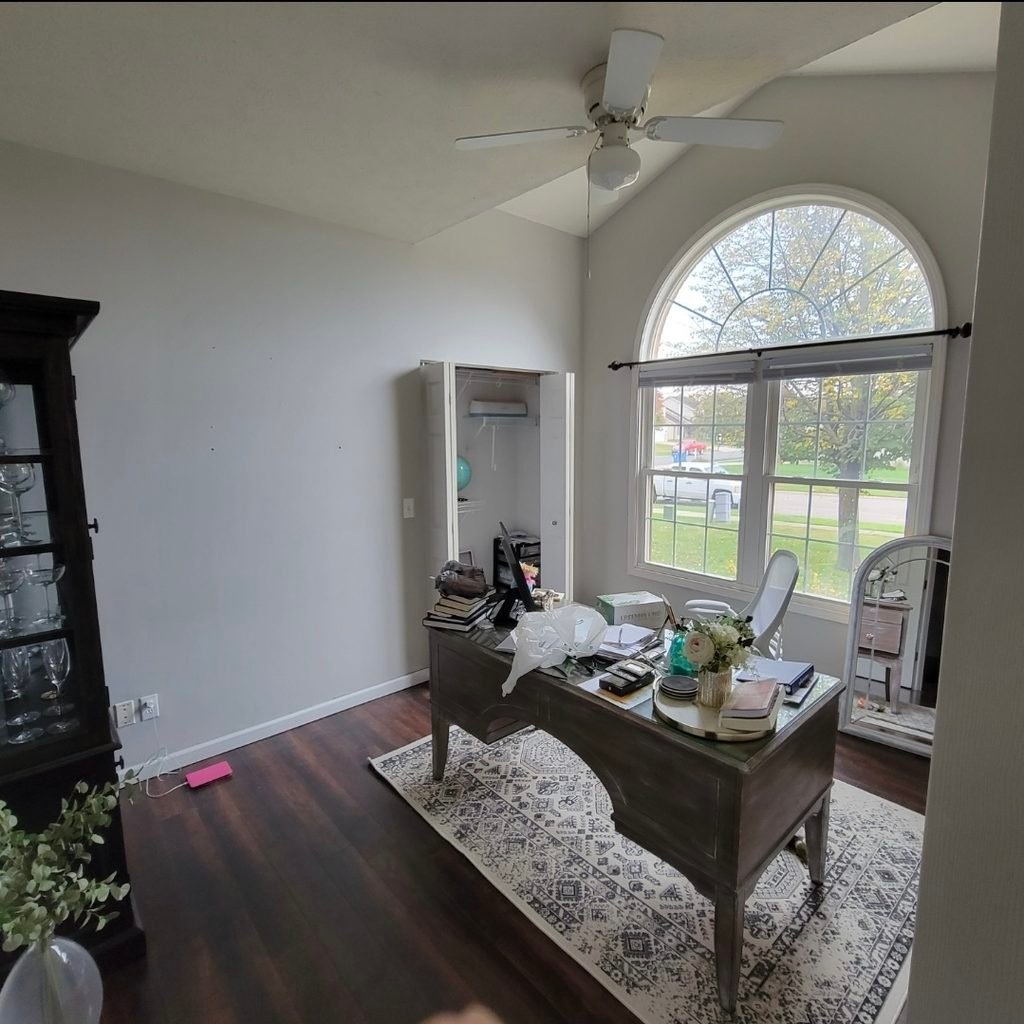
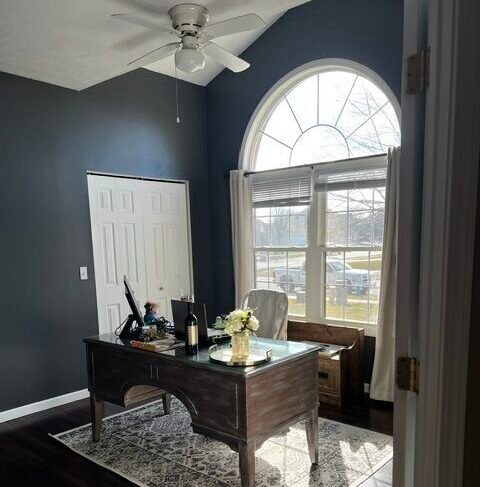
One of the biggest changes we’ve made to a room came from paint. What started as my office eventually became my son’s room, but before that, painting the walls a dark color completely changed how the space felt without changing the room itself.
Changing something also teaches you what you actually like, which brings me to the last category.
INVEST
Sometimes the answer really is to buy the thing, replace the thing, or spend the money. Keep the Couch isn’t about never buying anything. It’s about knowing why you’re buying it.
We bought an entire house, after all. And there are absolutely things in it that I know I eventually want to invest in.
I want new, lighter hardwood floors. I want to completely remodel our kitchen someday. And yes, I still want new windows—not just because I want a different look, but because some of them actually need to be replaced.
Those are investments I can justify. I know what difference they’ll make, and I know they’re part of the bigger plan for our house.
We’re also not ready to do those things yet.
We’ve made big investments too. Our backyard patio is probably the clearest example. We could have repaired what was there or rebuilt the old deck, but neither would have given us the backyard we actually wanted. Instead, we spent more to tear everything out and pour one large concrete patio—and three years later, I wouldn’t change that decision.
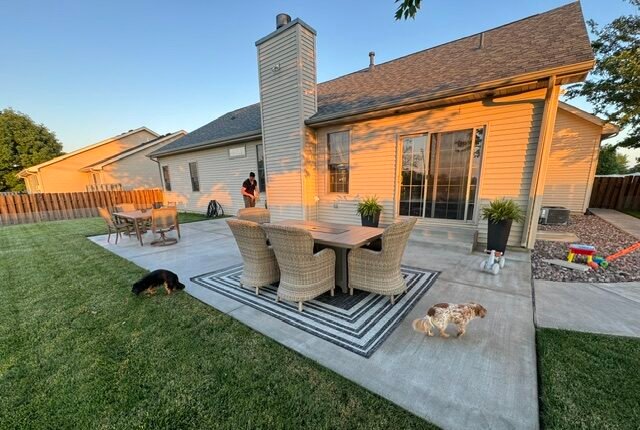
That’s the difference for me. Investing isn’t automatically about spending more. It’s spending more when you understand the problem you’re solving and know the result is worth it to you.
But waiting on the big investments doesn’t mean we’ve stopped investing in our home. If you looked at the front of our house when we started compared to where it is today, it looks completely different—and we haven’t replaced the windows or tackled some massive renovation.
Instead, we’ve put our money into the changes that could make a difference right now. Paint, the start of our landscaping, and smaller projects have already made a difference in how our house looks and feels while the bigger investments wait.
That’s really the point. You don’t have to choose between spending nothing and doing the $50,000 renovation. There is a whole lot of room in between. I want to spend where it will make a meaningful difference now, while keeping the bigger picture in mind so we’re not throwing money at temporary fixes we’ll regret later.
So before I spend money on something for our house, I try to ask: Can I keep what I have? Could I move something instead? Can I change it?
And if none of those solve the problem?
That’s when I invest.
The goal was never to spend nothing.
It’s to know why you’re spending it.